Economic headlines these days are full of warnings for people looking to find stable careers. Layoffs at large companies, softer consumer spending, and talk of a possible recession have made a lot of people nervous. Ohio’s trucking industry tells a different, more confident story. Wages are holding up, job openings keep coming, and the data shows this isn’t luck. The resilience of Ohio’s trucking industry comes down to competitive wages that go further with a lower cost of living, steady job openings driven by an aging workforce, and a location that’s perfect for moving freight.
Ohio Truck Driver Wages Are Outpacing Expectations
Recent wage data shows Ohio truck drivers are earning solid, dependable pay. According to Glassdoor’s 2026 salary data, the average Ohio truck driver earns about $69,770 a year, or roughly $34 an hour. Drivers in Columbus specifically average even more, at $71,574 a year, which is slightly above the national average for the role.
ZipRecruiter’s July 2026 figures for CDL truck drivers in Ohio show a similar pattern, with an average of $69,541 a year. Top earners in the state reported pulling in close to $90,000 annually, especially in specialized roles like tanker or hazmat hauling.
These numbers line up with national data. The Bureau of Labor Statistics (BLS) reported that long-distance truck drivers earned a median weekly wage of $1,323 in January 2026, which works out to about $68,800 a year for full-time work. The American Trucking Associations’ most recent driver compensation study put the national median even higher, at roughly $76,000, with top performers earning $90,000 or more.
New drivers are not left out of this trend. Entry-level CDL holders in Ohio typically start between $38,000 and $50,000 in their first year, depending on the carrier and freight type. That is a strong starting point for a career that usually requires only a few weeks of CDL training rather than a college degree.
A Trucking Paycheck Goes Further in Ohio
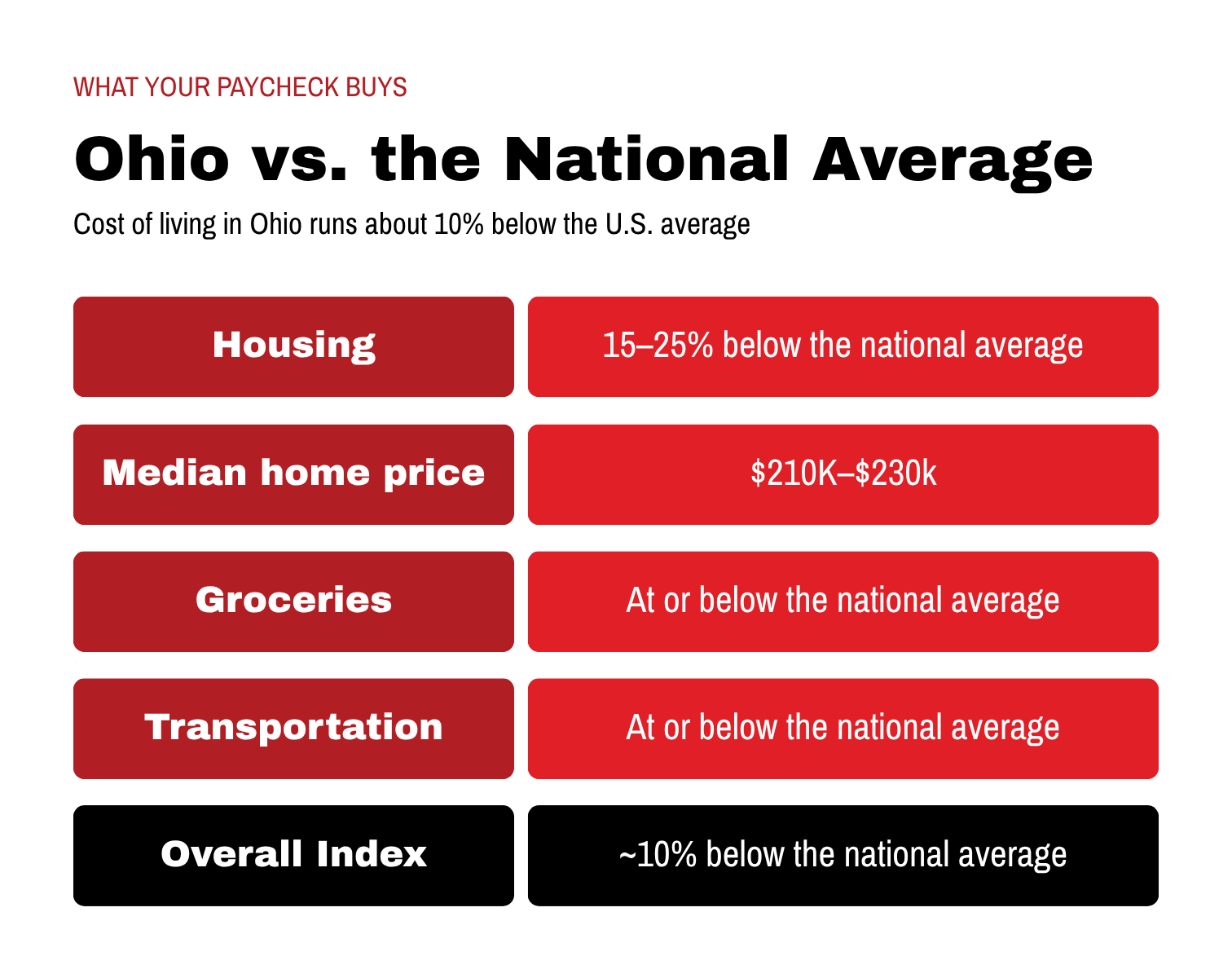
Pay only matters if it can cover all the costs of living a comfortable life, and this is a strong reason why Ohio gives new drivers an edge. Multiple 2026 cost-of-living indexes put Ohio’s overall cost of living roughly 10% below the national average. Housing accounts for most of that gap, running about 15% to 25% cheaper in Ohio than the national average.
Home prices show this clearly. The median home price in Ohio sits around $210,000 to $230,000, compared to a national median closer to $420,000. For a new driver starting out, that difference in housing costs can mean that instead of renting long-term, a mortgage and owning a home could be within their budget.
Everyday costs follow the same pattern. Groceries, utilities, and transportation in Ohio generally run at or below the national average, and cities like Cleveland and Cincinnati rank among the more affordable metro areas in the country. A driver’s paycheck simply covers more ground here than the same paycheck would in many other states.
In short, a driver earning Ohio’s average trucking wage while paying Ohio’s lower cost of living ends up with more room left over each month than a driver earning that same wage somewhere more expensive. That extra room can go toward savings, family expenses, or simply just lowering financial stress.
Job Openings Keep Growing, Even in a Slower Economy
Wages are only half the story. The other half is demand, and Ohio’s trucking job market has no shortage of demand.
Nationally, the BLS projects about 237,600 job openings a year for heavy and tractor-trailer truck drivers through 2034. Most of these openings exist because drivers are retiring faster than new ones enter the field, not because new positions are being created temporarily. The American Trucking Associations puts the national driver shortage at about 82,000 in 2026, up from 78,000 just two years earlier, a gap tied directly to that aging workforce. Openings like these create steady demand for people willing to complete entry-level driver training and get on the road.
Ohio’s own labor market reflects this steady demand. The state’s unemployment rate sat at 3.6% in June 2026, one of the lowest levels in Ohio’s history and well below levels seen during past economic slowdowns. Even as some sectors, like tech and retail, have announced layoffs this year, trucking and logistics companies in Ohio have kept hiring.
Ohio’s Location Gives the Industry a Built-In Advantage
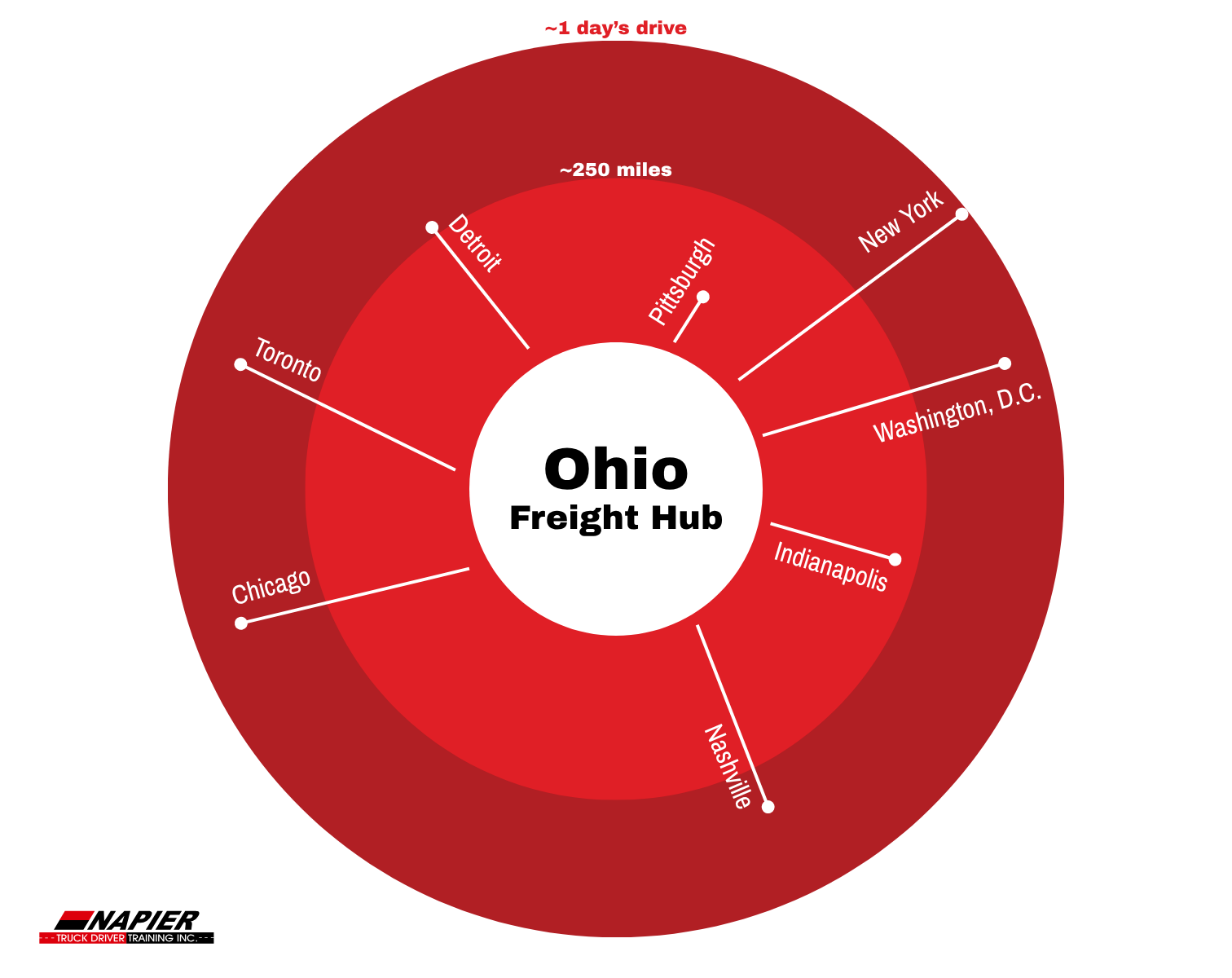
A big part of why Ohio’s trucking industry stays strong even in tough economic times comes down to geography. Ohio sits within a one-day drive of about 60% of the population in the United States and Canada. That makes it one of the most efficient states in the country for moving freight, whether goods are headed to Chicago, Pittsburgh, or the East Coast.
The state also has the fourth-largest interstate highway system in the nation, with close to 7,000 lane miles across eight major routes. Add in one of the largest freight rail networks in the country, and Ohio becomes a natural hub for companies that need goods moved quickly and reliably. Steady freight volume is a big reason why trucking companies in Ohio keep hiring drivers even when other industries pull back.
Columbus, in particular, has grown into a major logistics center. The Columbus region is home to thousands of logistics and distribution operations and tens of thousands of related jobs, driven largely by its central location and access to interstates I-70 and I-71.
What This Means for Ohio’s Economy Overall
Put together, the picture is clear. Ohio truck drivers earn competitive wages, those wages stretch further because of a lower cost of living, job openings keep coming as the workforce ages, and Ohio’s location keeps freight moving even when other industries slow down. None of that happened by chance. It reflects how tightly trucking is woven into the rest of Ohio’s economy.
Trucking touches nearly every other industry in the state, from manufacturing to agriculture. Groceries still need to reach shelves, factories still need parts delivered, and online orders still need to reach doorsteps, regardless of what the broader economy is doing. Steady demand makes trucking a stable career path during a shaky stretch for other industries, especially in Ohio.
Frequently Asked Questions
Is trucking a stable career right now?
Yes. Trucking jobs maintain competitive pay even as some other industries have slowed down or cut positions in 2026.
How much do truck drivers make in Ohio?
Pay averages between $58,000 and $71,000 a year, depending on the city and type of freight, with entry-level drivers typically starting between $38,000 and $50,000.
Why is there still a truck driver shortage if pay is competitive?
The shortage is mainly driven by an aging workforce retiring faster than new drivers are entering the field, not by a lack of interest in the pay itself.
Does Ohio’s location actually affect trucking job demand?
Yes. Ohio’s central position and its access to major interstates and rail lines mean a steady, high volume of freight moves through the state, which keeps demand for drivers consistent.
Are trucking jobs affected by a slowing economy the same way other industries are?
Not usually to the same degree. Freight related to groceries, manufacturing parts, and everyday goods keeps moving even when consumer spending slows in other areas.
Is Ohio a good state to start a trucking career compared to others?
Ohio is one of the best states for freight volume and logistics infrastructure, which supports steady job openings for drivers across the state.