Autonomous trucks are being tested on Ohio highways right now. Before anyone celebrates the technology, someone needs to ask: who pays the price when the driver’s seat goes empty?
Right now, somewhere on an Ohio highway, a driverless truck is hauling freight. No coffee stops. No CB radio chatter. No human being behind the wheel. Swedish autonomous trucking company Einride has begun testing its electric, cab-free “pods” on public roads in Ohio. The tech press is calling it a glimpse of the future. From where we sit in Hamilton, Ohio, training the next generation of commercial drivers, it looks less like progress and more like a warning shot.
We are not Luddites, we’re not against technology. We understand that industries change and evolve over time. But there is a big difference between change and elimination. What is being proposed with fully autonomous Class 8 trucking is not an upgrade. It is a replacement. And the human cost of that replacement has barely entered the conversation.
Ohio Is Not a Test Track. It Is Someone’s Livelihood.
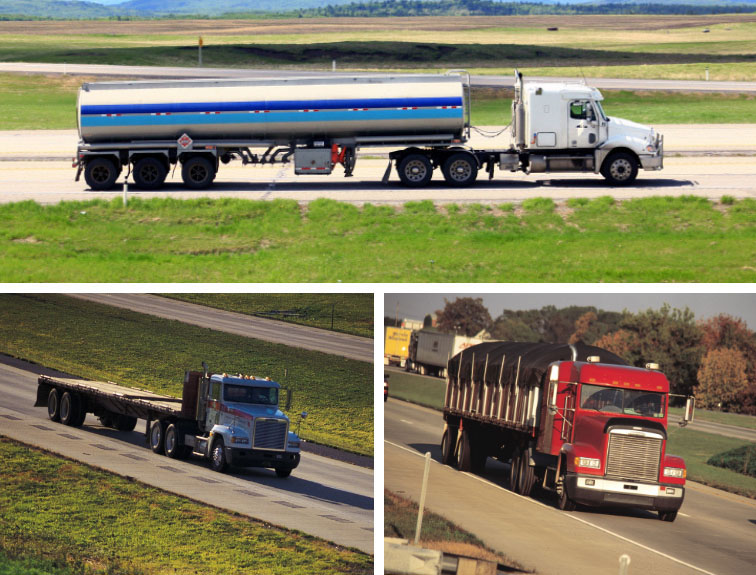
Einride’s Ohio testing, covered recently by FreightWaves, is just the beginning of a much larger wave. Aurora Innovation, Waymo Via, Kodiak Robotics, and several other well-funded companies are all competing to put driverless trucks on the road. The freight routes cutting through Ohio — including I-70, I-71, and I-75 — are not just lines on a map. They are the economic lifelines of working families in Dayton, Columbus, Cincinnati, and dozens of smaller communities in between.
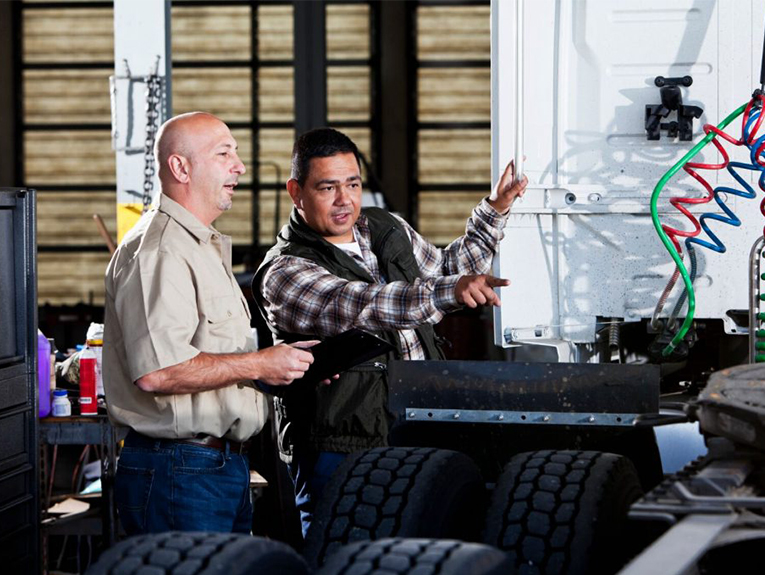
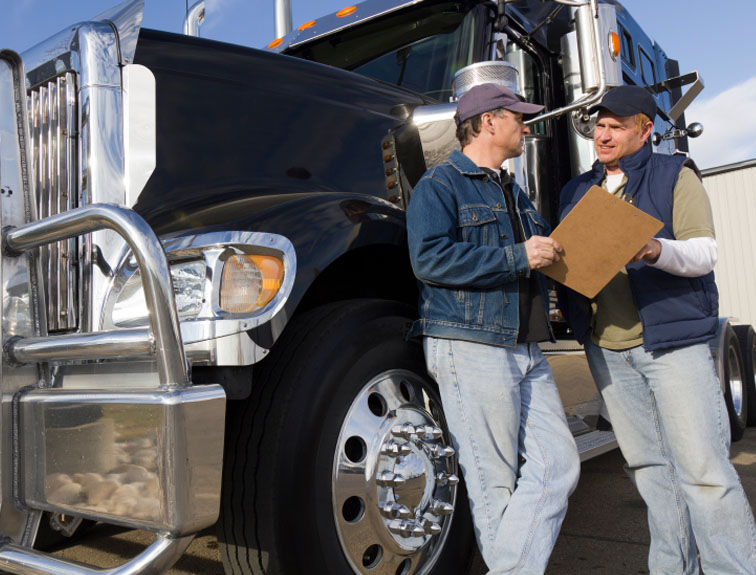
Ohio is home to roughly 170,000 commercial truck drivers. Across the country, the Bureau of Labor Statistics counts more than 3.5 million. These are not low-skill workers waiting to be “freed” from their jobs by technology. They are trained, licensed professionals who invested time, money, and effort earning their CDL — the same credential we help students earn right here in Hamilton every single day.
“I am deeply concerned about the disruption that AI and automation could bring to the U.S. economy. We need serious policy conversations about how to support workers through this transition, or we risk serious social and economic instability.” — Jamie Dimon, Chairman & CEO, JPMorgan Chase
Jamie Dimon is not someone known for his hand-wringing. In shareholder letters and public forums, the JPMorgan Chase CEO has warned that the pace of AI and automation threatens to outrun the economy’s ability to absorb workers who lose their jobs. He is not alone. Former Treasury Secretary Larry Summers has called the potential job loss from automation “the defining economic challenge of our time.” When the people who built modern capitalism are worried, the rest of us should be paying close attention.
It Is Not Just the Driver’s Seat That Goes Empty
The debate around autonomous trucking tends to focus narrowly on the driver. But the driver is just the most visible piece of a massive economic ecosystem. Think about what actually disappears when the human driver disappears from a long-haul route.
The Ripple Effect: What Gets Lost Beyond the Driver
Truck stop diners, fuel stations, and motels along freight corridors depend heavily on drivers stopping in. So do independent repair shops, CDL testing facilities, trucking schools, and freight brokers who work directly with owner-operators. Remove the driver, and all of those businesses feel it. That ripple effect is estimated to be two to three times the number of direct driving jobs — meaning potentially 7 to 10 million Americans whose jobs depend on trucking.
In small and mid-sized Ohio cities like Hamilton, Findlay, and Lima, those connected jobs are not a small detail. They are the economic foundation. A truck stop off I-75 employs cooks, cashiers, maintenance workers, and managers. A CDL school like ours employs instructors, administrators, and support staff, while putting tuition dollars back into the local economy. These are not Silicon Valley abstractions. These are our neighbors.
The Technology Is Not Ready, and the Rules Do Not Exist
Supporters of autonomous trucking love to talk about what the technology will eventually be able to do. The reality today is far more limited. Current autonomous systems work well in controlled conditions: clear weather, well-marked highways, predictable traffic. What they cannot reliably handle is everything else. The ice storm on I-70 in January. The debris in the road at 2 a.m. The split-second judgment call when a child darts into a construction zone. The complex backing maneuver required at a cramped distribution center.
The Federal Motor Carrier Safety Administration (FMCSA) has not yet set up a clear set of rules for fully driverless trucks operating in regular traffic. Ohio has been open to welcoming AV testing, but allowing test vehicles on the road is not the same as answering the hard questions about liability, insurance, cybersecurity, and what happens when a 40-ton autonomous vehicle fails. In plain terms, we are making the rules up as we go.
“The question is not whether automation will come. The question is whether we have the courage to manage its arrival in a way that does not hollow out the middle of America.” A sentiment echoed by economists, labor leaders, and policymakers across the political spectrum
What We Are Really Talking About Is a Choice
Autonomous trucking is not an act of nature. It is a business decision made by investors, executives, and shareholders who stand to profit enormously from removing the biggest single cost in freight operations: driver pay. It is being pushed forward by investor money and welcomed by lawmakers who may not fully understand what these communities stand to lose.
Society has a choice here. We can allow unmanaged automation to move forward at the pace that gets investors the best return, or we can insist on a transition that takes seriously the obligation we have to working people. That does not mean banning autonomous vehicles. It means demanding real answers before these technologies spread: What is the plan for drivers who lose their jobs? What retraining programs will be funded, by whom, and when? What communities will receive support? How will the tax base hold up when millions of middle-income workers are replaced by machines that pay no income tax and spend nothing at local restaurants?
Jamie Dimon said it plainly in his 2024 annual letter to JPMorgan shareholders: the economy and government need to prepare for a world where automation displaces workers faster than new jobs are created. He pushed for investment in job training, infrastructure, and economic safety nets. We agree completely — and we would add that part of that preparation means not speeding up the displacement before the support system to absorb it actually exists.
The Road We Choose Matters
At Napier Truck Driver Training, we have spent years preparing Ohioans for careers that offer real wages, real independence, and real dignity. The CDL is one of the most accessible paths to a middle-class life that does not require a four-year degree. Our graduates drive for regional carriers, national fleets, and local municipalities. They own homes in Hamilton. They coach Little League. They are the working backbone of this region.
We are not afraid of the future. But we refuse to accept a future built on the idea that the people who keep America supplied with food, fuel, medicine, and goods are simply a cost to be engineered away. Before the next autonomous truck rolls onto an Ohio highway, we deserve a real conversation — not a press release — about who benefits, who bears the burden, and what kind of economy we actually want to build.
The road ahead has room for innovation. It must also have room for the people who built it.